

Tainted Crypto Warning part 2:
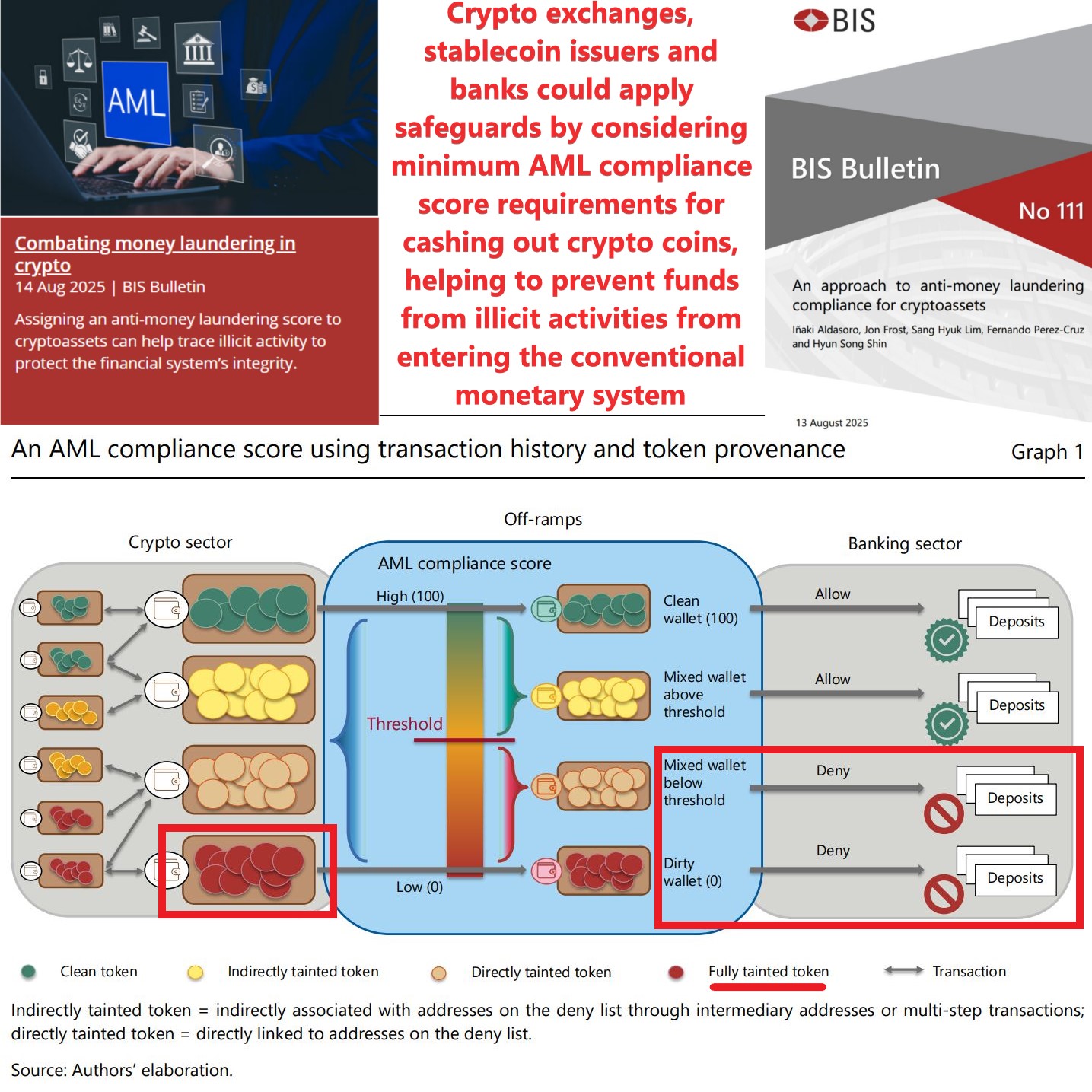
Bank of International Settlements (BIS) released a bulletin on 8/14/25 regarding Anti-money laundering compliance for crypto assets. In the document they discuss how to deal with Tainted crypto coins. They propose assigning a score to every wallet, those with low scores would not be allowed to offramp (cash out). They also want to incentivize crypto exchanges to avoid accepting or paying out tainted coins, as failure to comply could result in fines or other penalties.
Make sure you check out my previous warning post regarding Tainted Crypto here.
WordPress: https://propheticmoney.com/warning-have-you-heard-of-tainted-cryptos-prophetic-money/
YT post: https://www.youtube.com/post/UgkxLkozXOayerqueaAkGAb2iHqcBWg6Y1Mz
As I mentioned before, Tainted Crypto is basically crypto that has been stolen by hackers, who then try to go on various wallet swap services and Defi platforms like pancake swap to trade those coins for clean crypto. Someone who unknowingly receives these tainted coins, has now tainted their entire crypto wallet. If they try to transfer crypto from that wallet to a crypto exchange, they might get blacklisted, have assets frozen or account shut down. You only have to worry about this if you use the wallet swap feature or use defi services like pancake swap. It trade all your crypto on a centralized exchange, you have nothing to worry about. Because the exchange already makes sure that only mostly clean crypto is sent to the exchange.
The Bank for International Settlements (BIS) plays a critical role in the global financial system as an international financial institution owned by 63 central banks representing about 95% of world GDP.
The BIS functions as a hub for central banks and financial regulators to collaborate, innovate, and stabilize the international financial system, without being a supranational authority imposing decisions but rather by facilitating cooperation and sound practices globally. It is headquartered in Basel, Switzerland, with representative offices in Hong Kong and Mexico City. The BIS was originally established in 1930 to manage post-World War I reparations but evolved into its current mission of fostering global monetary and financial stability through cooperation.
Bank of International Settlements
BIS Bulletin No111 – 13 August 2025
https://www.bis.org/publ/bisbull111.pdf
An approach to anti-money laundering compliance for crypto assets
An AML compliance score that references the UTXOs for bitcoins or wallets for stablecoins could use the information on the blockchain, including the full history of transactions and the wallets they have passed through. A higher value (eg maximum 100) would denote relatively clean funds, coming mostly from “allow-listed” wallets, while a lower value (eg minimum zero) would denote funds that are tainted by being associated with one or more wallets known to be on a “deny list” (Graph 1). The AML compliance score for such wallets can then be assessed against a threshold value chosen by authorities following jurisdictional considerations to determine whether offramp transactions with that wallet are allowed or denied. Crypto exchanges, stablecoin issuers and banks could apply safeguards by considering minimum AML compliance score requirements for cashing out crypto coins, helping to prevent funds from illicit activities from entering the conventional monetary system.
Imposing a duty of care on these entities would incentivize them to avoid accepting or paying out tainted coins, as failure to comply could result in fines or other penalties.