
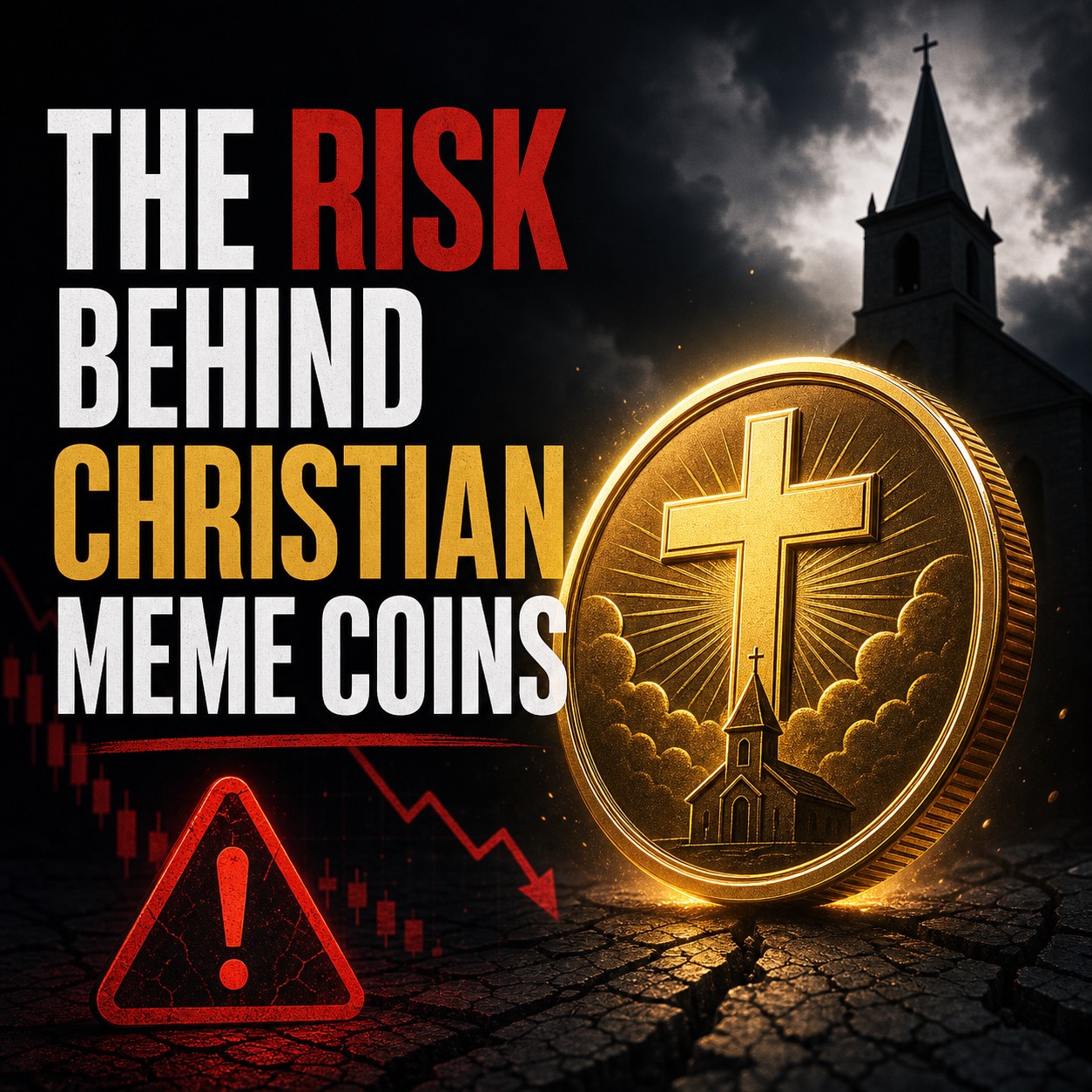
❌ No oversight
❌ No accountability
❌ No guarantee the money helps the cause
❌ Easy to rug-pull
❌ No charity tax advantage
What meme coins are
- Meme coins are not investments. They are speculative money flows.
- Price goes up when more people buy than sell. It goes down when they sell.
- Charts do not cause the movement; they only show it.
- Most meme coins are created in minutes, and the creator usually holds a large share.
Why they are risky
- Early buyers get in cheap.
- Later buyers bring in real money.
- You are trading real money for something closer to Monopoly money.
- It only has value while new buyers keep coming in.
- When large holders sell, the price collapses. That is why rug pulls are common.
Why Christian or charity themes are a problem
- Many projects use faith, charity, or causes to attract buyers.
- Unlike real charities, there is no oversight, no audits, and no guarantee funds are used as promised.
- Even if a ministry creates a coin, selling it to pay expenses pushes the price down and hurts investors.
- Using the coin for ministry needs directly harms the community.
Why real giving is different
- Real charitable contributions can be tax-advantaged.
- Meme coin profits are taxable and can be a heavy burden on top of wages.
- If you want to support a cause, donate to an established ministry or charity.
- If you want to build something new, create a real foundation, not a meme coin.
The core problem
- Buying a meme coin is not investing in a productive asset.
- It is buying something that only has value if someone else pays more later.
- That structure resembles a pyramid system.
- Nearly all pyramid-style systems collapse when new buyers stop coming in.
Prophetic Money Commentary
In this post, I am not referring to SHIB or LUNC prophetic coins. I am referring to the many small meme coins created in recent years that use Christian branding to appeal to Christians. They claim the money will support charity, but without oversight there is no way to verify that promise. That leaves room for the funds to be misused, diverted into a rug pull, or spent on an unsustainable/expensive lifestyle
A real charity or tax-exempt foundation can use donated funds for its mission without creating a taxable sale for the charity itself. But if someone launches a meme coin and later sells it to fund a cause, that sale can trigger capital gains or income taxes (30% to 50%), plus trading fees and withdrawal fees. That means less money reaches the actual mission, and there is still no guarantee the funds will be used as promised. Crypto also adds extra risk through loss, wallet mistakes, and hacks